
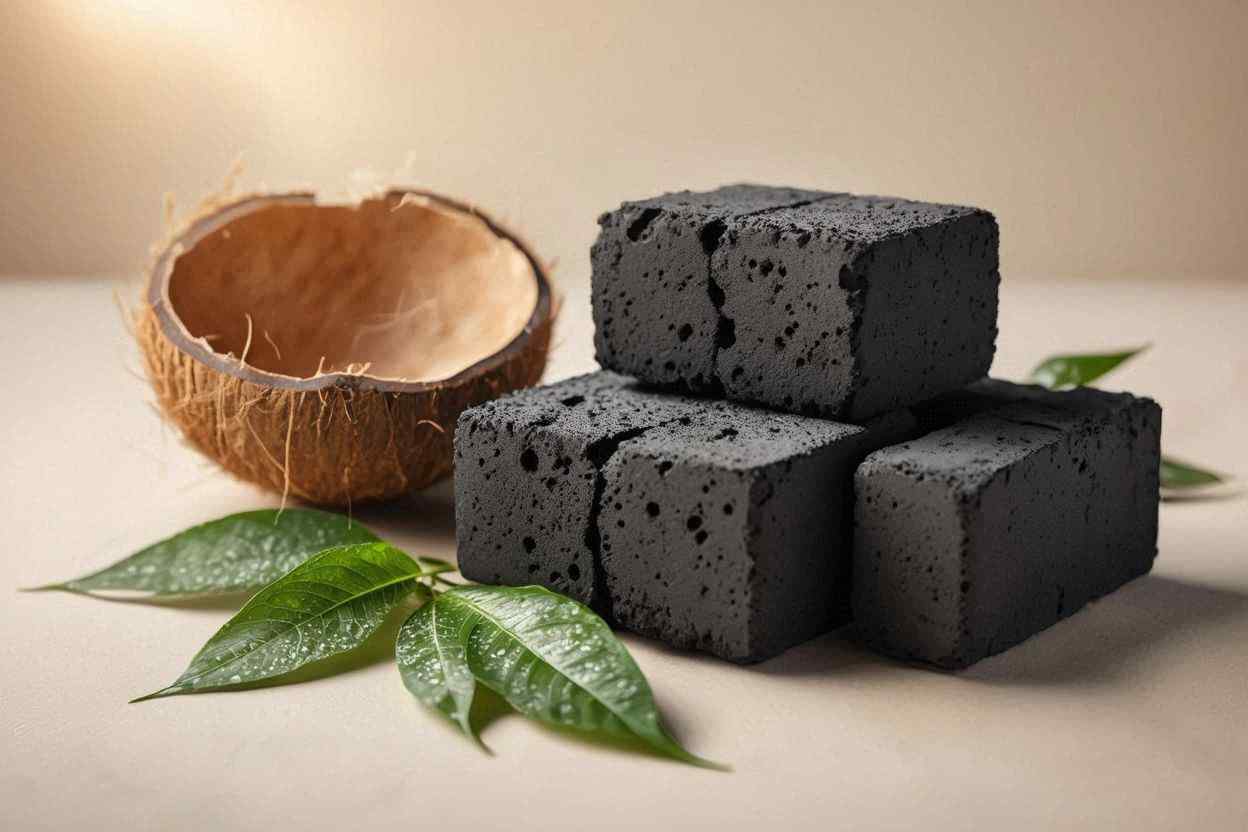
Eco friendly charcoal briquette advantages are becoming increasingly important as global industries shift toward sustainable and environmentally responsible solutions. In both hookah and BBQ markets, users are now prioritizing products that not only perform well but also minimize environmental impact.
To understand how sustainable charcoal products are produced and supplied globally, you can explore benefits of low ash coconut charcoal briquettes. In addition, platforms like igaffiliatemedia.com provide insights into product specifications, export quality, and sourcing solutions for international buyers.
As awareness of climate change and resource conservation grows, businesses and consumers alike are seeking alternatives to traditional wood-based charcoal. Therefore, eco friendly briquettes, especially those made from coconut shells, have emerged as a preferred option in international markets.
What Makes Charcoal Briquettes Eco Friendly
Eco friendly charcoal briquettes are typically made from renewable or waste materials such as coconut shells, sawdust, or agricultural residues. Unlike traditional charcoal, they do not rely on cutting down trees, which helps reduce deforestation.
Moreover, the production process focuses on minimizing environmental impact by using efficient carbonization methods and natural binders. This ensures that the final product remains safe, clean, and sustainable.
Additionally, eco friendly briquettes burn more efficiently and produce less smoke compared to conventional charcoal, making them suitable for both indoor and outdoor applications.
Key Eco Friendly Charcoal Briquette Advantages
One of the main advantages of eco friendly charcoal briquettes is their sustainability. By utilizing agricultural waste materials such as coconut shells, they help reduce environmental pollution and support circular economy practices.
Furthermore, these briquettes provide consistent performance due to their uniform density and composition. This allows stable heat output and longer burning duration, which is essential for both hookah and BBQ use.
- Reduced deforestation and environmental damage
- Lower smoke and emissions during combustion
- Efficient use of agricultural waste materials
- Consistent heat and longer burning time
- Cleaner and safer user experience
Environmental Impact Compared to Traditional Charcoal
Traditional charcoal production often contributes to deforestation and high carbon emissions. In contrast, eco friendly briquettes use waste materials and more controlled production processes, reducing their environmental footprint.
Because they are derived from byproducts like coconut shells, these briquettes help minimize waste and promote resource efficiency.
In addition, cleaner combustion improves air quality and reduces harmful emissions, making them safer for users and the environment.
Why Coconut Shell Briquettes Are the Best Option
Coconut shell briquettes are widely considered the best eco friendly charcoal option due to their natural composition and low impurity levels.
They produce less ash, burn longer, and deliver higher heat compared to many traditional charcoal types. Premium products can even achieve ash levels as low as 0.5–1.5% with long burning durations.
In addition, coconut shells are renewable agricultural waste, ensuring sustainability without harming forests.
Applications in Hookah and BBQ Industries
Eco friendly charcoal briquettes are widely used in both hookah and BBQ applications due to their efficiency and clean burning properties.
In the hookah industry, low ash and stable heat are essential for maintaining flavor consistency and smoke quality. Meanwhile, in BBQ use, they provide even heat distribution for better cooking results.
Therefore, their versatility makes them a valuable fuel choice across multiple industries.
Conclusion
Eco friendly charcoal briquette advantages extend beyond environmental benefits. They provide high performance, cleaner combustion, and reliable consistency for both hookah and BBQ applications.
By choosing sustainable charcoal solutions, businesses and consumers can reduce environmental impact while maintaining product quality and efficiency.


