
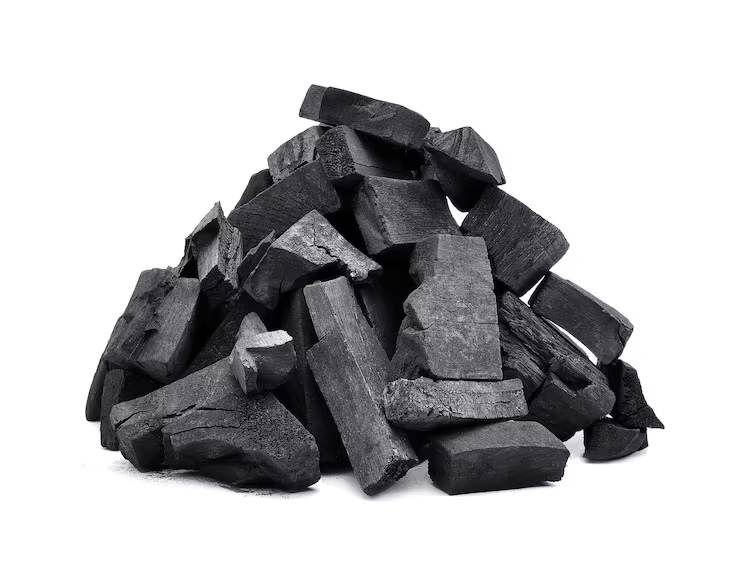
As global energy demands continue to rise, the world faces the urgent challenge of balancing growth with environmental sustainability. Traditional energy sources such as coal and firewood contribute heavily to deforestation, carbon emissions, and climate change. In response, renewable alternatives have emerged, and among them, advanced briquette technology stands out as a promising solution. This innovative approach to fuel production is reshaping industries, supporting local economies, and helping societies transition toward greener living.
What Is Advanced Briquette Technology?
Advanced briquette technology refers to the use of modern methods and machinery to produce high-quality briquettes from biomass materials such as coconut shells, sawdust, rice husks, and agricultural waste. Unlike conventional briquette-making, which often lacks efficiency and consistency, advanced methods ensure:
-
Higher density and longer burn time
-
Minimal smoke and odor
-
Reduced carbon emissions
-
Consistent quality standards for global markets
By applying modern carbonization techniques, precise compression systems, and eco-friendly binders, briquette manufacturers are able to produce fuels that rival or even surpass traditional charcoal in performance.
Environmental Benefits of Briquette Innovation
The most significant advantage of advanced briquette technology lies in its environmental impact. By using agricultural byproducts like coconut shells or sawdust, this method reduces waste and lowers the reliance on logging for charcoal production. In turn, this helps conserve forests and combat deforestation, a major driver of climate change.
Coconut-based briquettes are especially popular because they burn longer, produce less ash, and are renewable. Companies across Asia and beyond are embracing sustainable practices, such as innovative coconut briquette solutions, to meet the growing demand for eco-friendly energy sources.
Economic Opportunities for Local Communities
In addition to the environmental benefits, advanced briquette technology creates new opportunities for local economies. Farmers and rural communities can supply raw materials like coconut shells and husks, which were once considered waste. This opens up fresh income streams while supporting small businesses and entrepreneurs.
Moreover, industries that adopt modern briquette technologies can tap into international markets where sustainable products are in high demand. From restaurants to large-scale manufacturers, buyers increasingly prefer eco-friendly fuel sources that align with global green energy standards.
Applications of Advanced Briquettes
Thanks to their superior performance, briquettes produced using advanced technology have a wide range of applications:
-
Household Cooking – Smokeless and easy-to-use briquettes make cooking cleaner and safer.
-
Barbecue and Grilling – Preferred by chefs and restaurants for consistent heat and long burn times.
-
Industrial Energy – Factories use them as a reliable alternative to coal and firewood.
-
Export Markets – High-quality briquettes are in demand in Europe, the Middle East, and North America.
These diverse uses highlight the versatility of briquettes and why modern technology is crucial for meeting market expectations.
Integrating Coconut Byproducts Beyond Briquettes
While coconut shells are widely used in briquette production, the coconut tree offers even more potential. For instance, its fibrous husks can be transformed into handicrafts, ropes, mats, and eco-friendly household items. Communities are already exploring such opportunities, and guides like this coconut fiber craft tutorial demonstrate how waste can be turned into valuable products. This synergy between briquette technology and other coconut-based innovations supports a circular economy where nothing goes to waste.
Conclusion
Advanced briquette technology is more than just an energy innovation it is a catalyst for environmental conservation, economic growth, and sustainable living. By turning waste into fuel, this technology provides a clean, renewable, and profitable solution for the world’s growing energy needs.
Whether through innovative coconut briquette solutions or creative uses of coconut fiber in handicrafts, the integration of modern technology with natural resources represents a brighter and more sustainable future for all.